
Expanding a software-as-a-service (SaaS) or Fintech product into the DACH region (Germany, Austria, Switzerland) is highly lucrative, but it is notoriously difficult to break into. The German-speaking market values hyper-localization, deep compliance, and formalized business relations.
To bridge this gap, many companies based in the Nordics (e.g., Sweden, Denmark) or BENELUX (e.g., Netherlands, Belgium) opt to hire a dedicated team, specifically, one DACH Marketing Expert and one DACH Sales Expert (Account Executive), based either locally or within their domestic headquarters.
However, underestimating the upfront cost and the unique timeline to reach Return on Investment (ROI) is a frequent mistake. Here is a realistic analysis of the data, the required runway, and the definitive break-even timeline.
Table of Content
1. The Baseline: Yearly Gross Salaries in Nordics & BENELUX
According to market data and salary indicators from Glassdoor and compensation databases, tech talent in these two regions commands premium compensation, though tax structures and base-to-variable splits differ. For a SaaS or Fintech expansion, companies look for mid-to-senior talent who can operate autonomously.
BENELUX Region (Focus on the Netherlands/Belgium)
- DACH Marketing Expert (Mid-Senior): €75,000 – €95,000 base salary.
- DACH Sales Expert / AE: €65,000 – €85,000 base salary (with an On-Target Earnings/OTE split of 50/50, bringing total compensation closer to €130,000+ upon hitting targets).
Total Year 1 Base Cost: ~€150,000 – €180,000
Nordics Region (Focus on Sweden/Denmark)
- DACH Marketing Expert (Mid-Senior): 850,000 SEK – 1,050,000 SEK (~€75,000 – €92,000).
- DACH Sales Expert / AE: 700,000 SEK – 900,000 SEK base (~€61,000 – €79,000) + equivalent variable commission structure.
Total Year 1 Base Cost: ~€140,000 – €171,000
2. The Hidden Factor: Employer Burde
Gross salary is not the full cost. Social security contributions, pension contributions, holiday allowances (e.g., the 13th month in the Netherlands), and equipment/software overhead add roughly 20% to 35% on top of the gross salary.
Conclusion on Year 1 Headcount Costs: When combining the gross salaries of one marketer and one sales expert, plus localized employer taxes and basic operational tools, a company must spend an average of €200,000 to €240,000 in fixed gross expenditures, just to get the duo through the first year, excluding any active marketing budget.
The Reality of Ramp-Up and Deal Cycles: SaaS vs. Fintech
The most effective GTM strategies in DACH are typically multi-channel and relationship-driven. Outbound sales remains a core engine, but it needs to be complemented by strong partnerships, targeted events, and high-quality content tailored to local buyers. Trust-building activities such as industry roundtables, peer introductions, and customer references often outperform purely digital acquisition channels. Purely scalable inbound or paid strategies rarely deliver sufficient efficiency on their own.
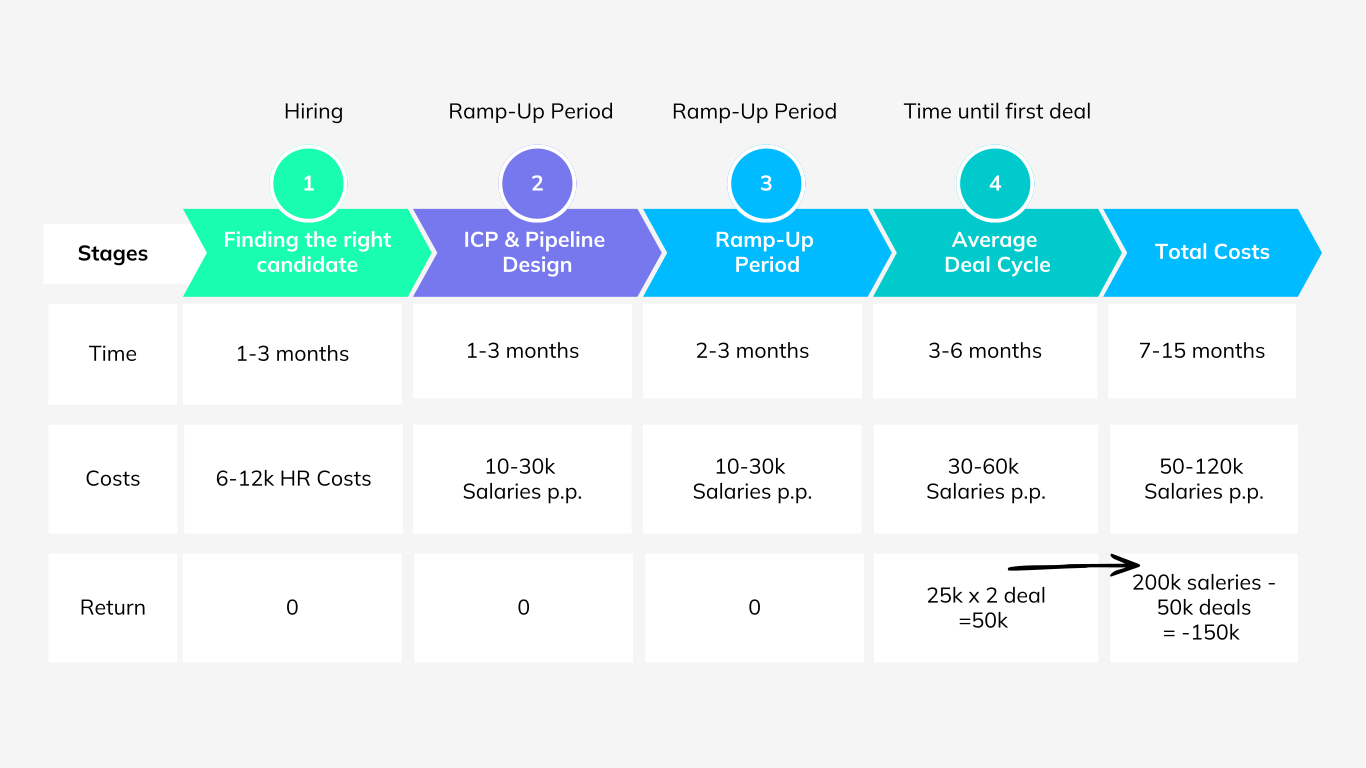
In SaaS: A marketing expert needs 3 months to localize positioning and build a pipeline. A sales rep needs 3 to 6 months to mature those leads. Realistically, your first meaningful revenue closes towards month 6 to 9.
In Fintech: Due to complex regulatory environments, security reviews, and multiple stakeholders, a sales expert often spends the first 6 to 12 months simply mapping out enterprise buying centers. True revenue conversion rarely happens in Year 1.
The Financial Burn and Break-Even ROI Timeline
The most effective GTM strategies in DACH are typically multi-channel and relationship-driven. Outbound sales remains a core engine, but it needs to be complemented by strong partnerships, targeted events, and high-quality content tailored to local buyers. Trust-building activities such as industry roundtables, peer introductions, and customer references often outperform purely digital acquisition channels. Purely scalable inbound or paid strategies rarely deliver sufficient efficiency on their own.
Year 1 Cash Runway Requirement
A company cannot expect the team to self-fund their operations in the first year. You must look at the combined cost of headcount and an actual local marketing spend (ad spend, events, localized content creation):
- Headcount (Gross + Burden): €220,000
- DACH Marketing Program Spend: €50,000 – €100,000
- Total Year 1 DACH Expansion Runway Required: €270,000 – €320,000.
3. When Does Break-Even Happen?
If a company is just entering the DACH territory with zero existing brand awareness, a positive ROI break-even is only possible after 1.5 to 3 years, depending heavily on the business model:
The SaaS Track (~1.5 to 2 Years to Break Even)
Because SaaS relies on recurring revenue (ARR), if the sales expert can build a pipeline and close €150,000 in ARR by the end of Year 1, the *cumulative* value of that ARR alongside Year 2 renewals and new business means the company will cross the break-even threshold toward the middle or end of Year 2.
The Fintech Track (~2.5 to 4 Years to Break Even)
Because Fintech deal cycles stretch past 12 months, Year 1 will yield almost zero revenue. Year 2 will see the first major pilot projects convert. Only when these multi-year contracts go into full production and transaction volumes scale up in Year 3 or Year 4 will the initial €300k+ annual burn be fully recouped.
4. Strategic Summary
Hiring a lean, 2-person "beachhead" team from the Nordics or BENELUX to conquer DACH is highly effective, but it requires patience. Expect to commit roughly €200,000+ in baseline gross compensation before accounting for localized marketing budgets. Ensure your executive board understands that if you are just entering the DACH region from scratch, you must budget for a minimum 2-year runway before the expansion moves from a cost center to a profit center.
Once hired, these experts cannot close deals on day one. The "DACH paradox" means longer trust-building cycles, extensive security questionnaires, and localized content generation.
Ready to crack the DACH market?
Book a free, no-obligation consultation call on GTM in DACH.